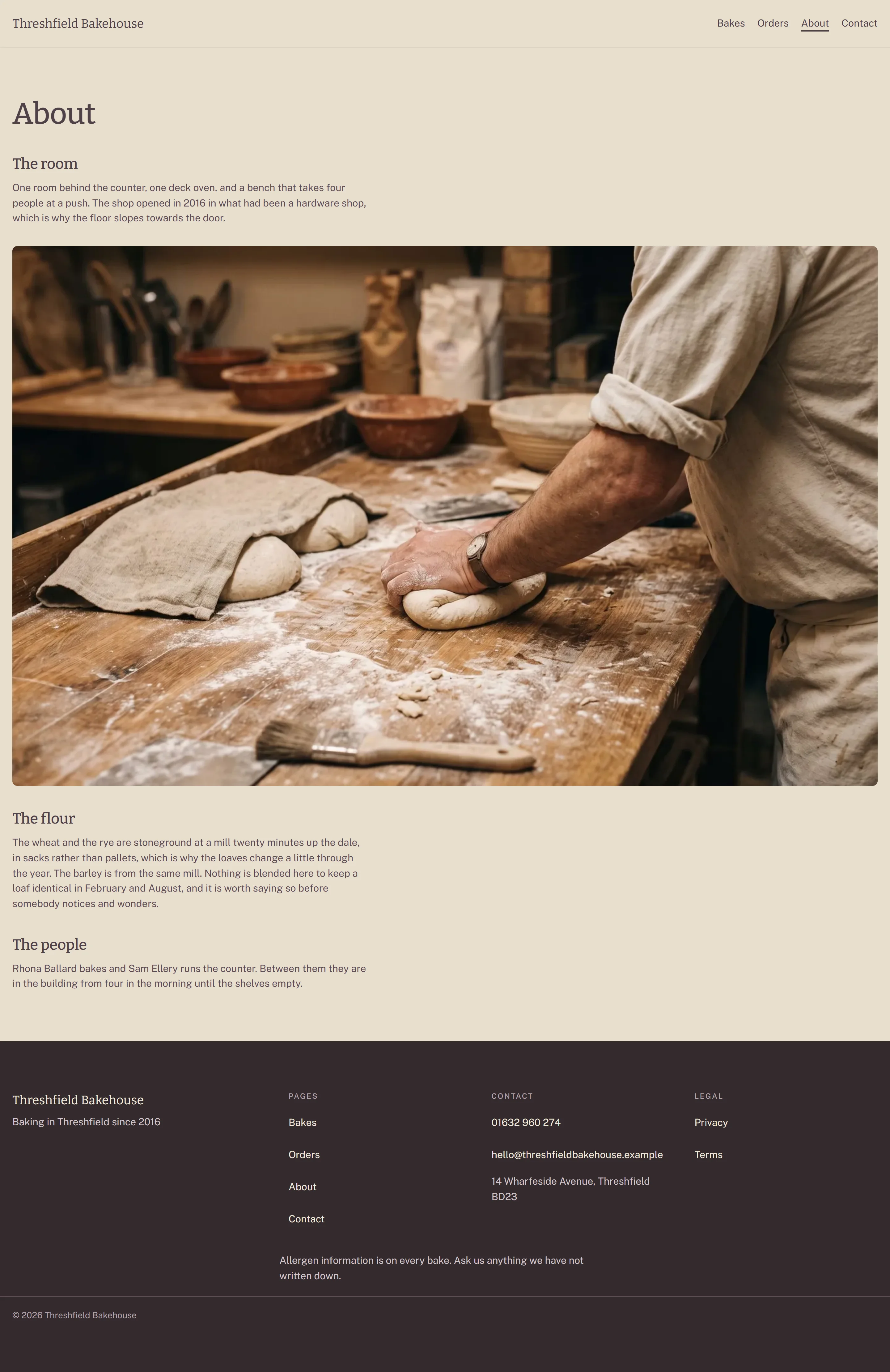
A bakery’s website is not a shop. The transaction happens at a counter, in the
morning, in person. What the site gets asked is narrower and more urgent than a
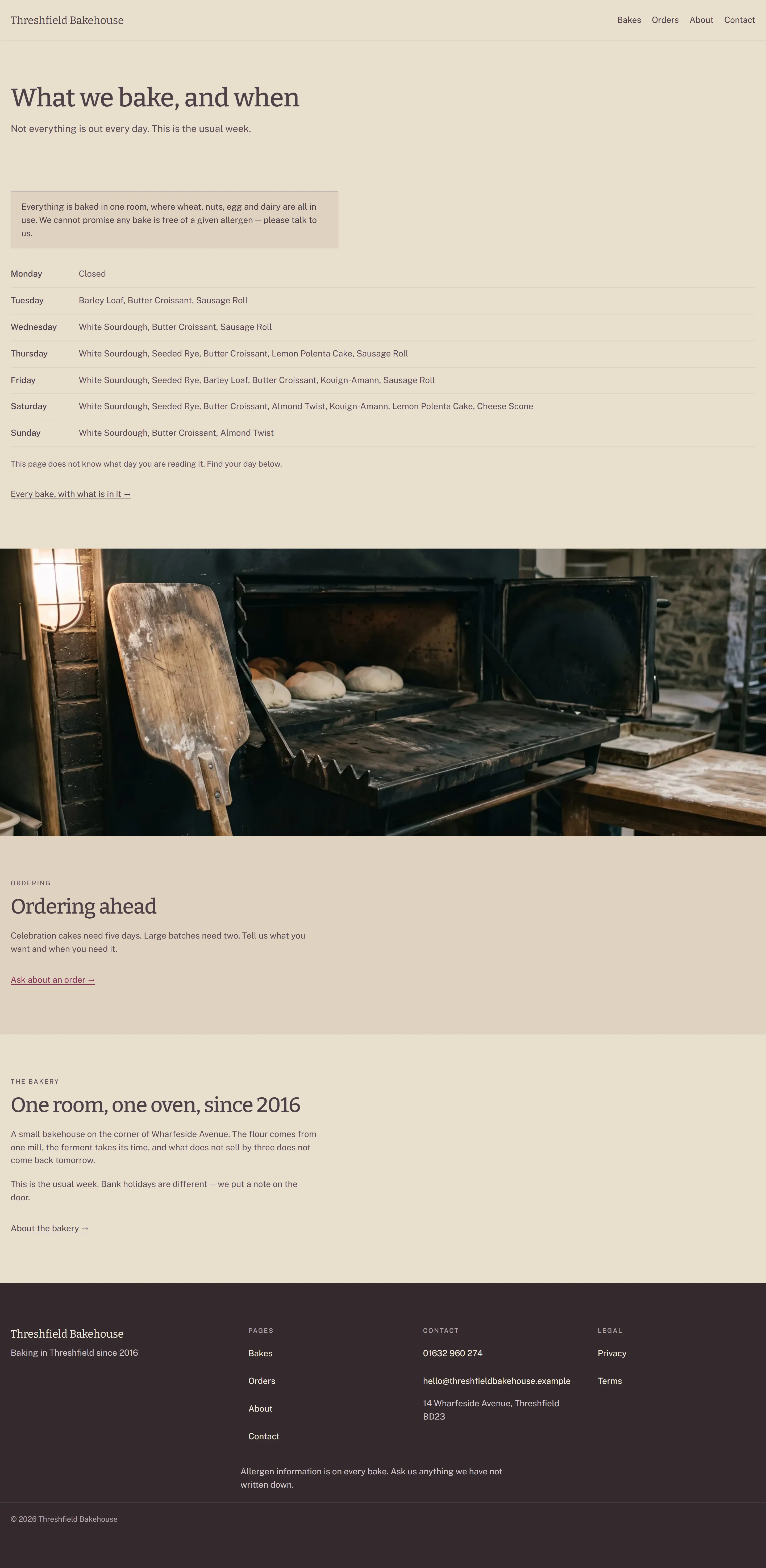
catalog: is there sourdough today, is there anything in this my son cannot
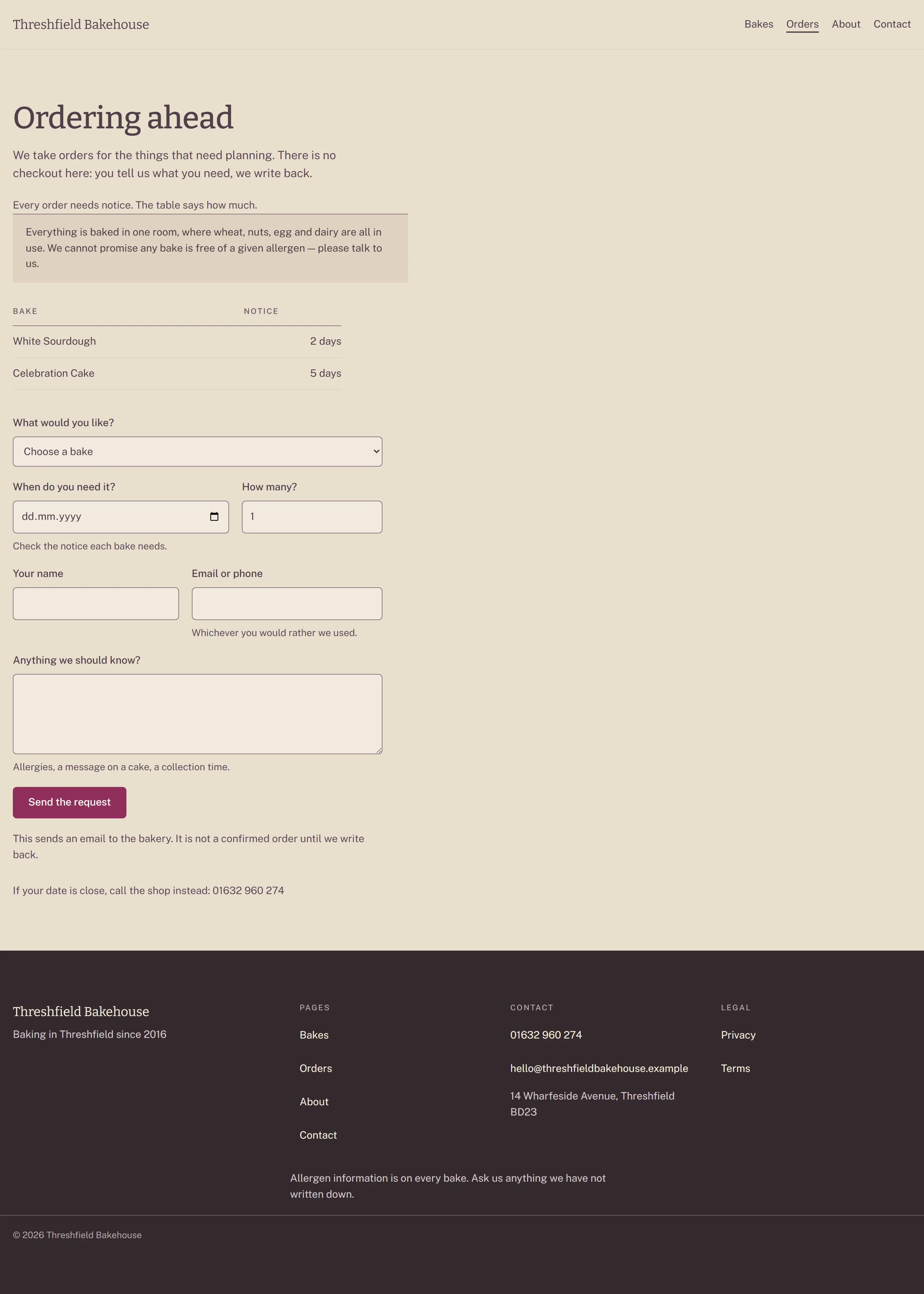
eat, and can I have a cake for Sunday.
Templates in this category answer none of the three. They model a bakery as an
online store, with a cart, a checkout and a shipping table, and then leave the
bake list as a gallery of photographs. Hopperton starts at the counter instead.
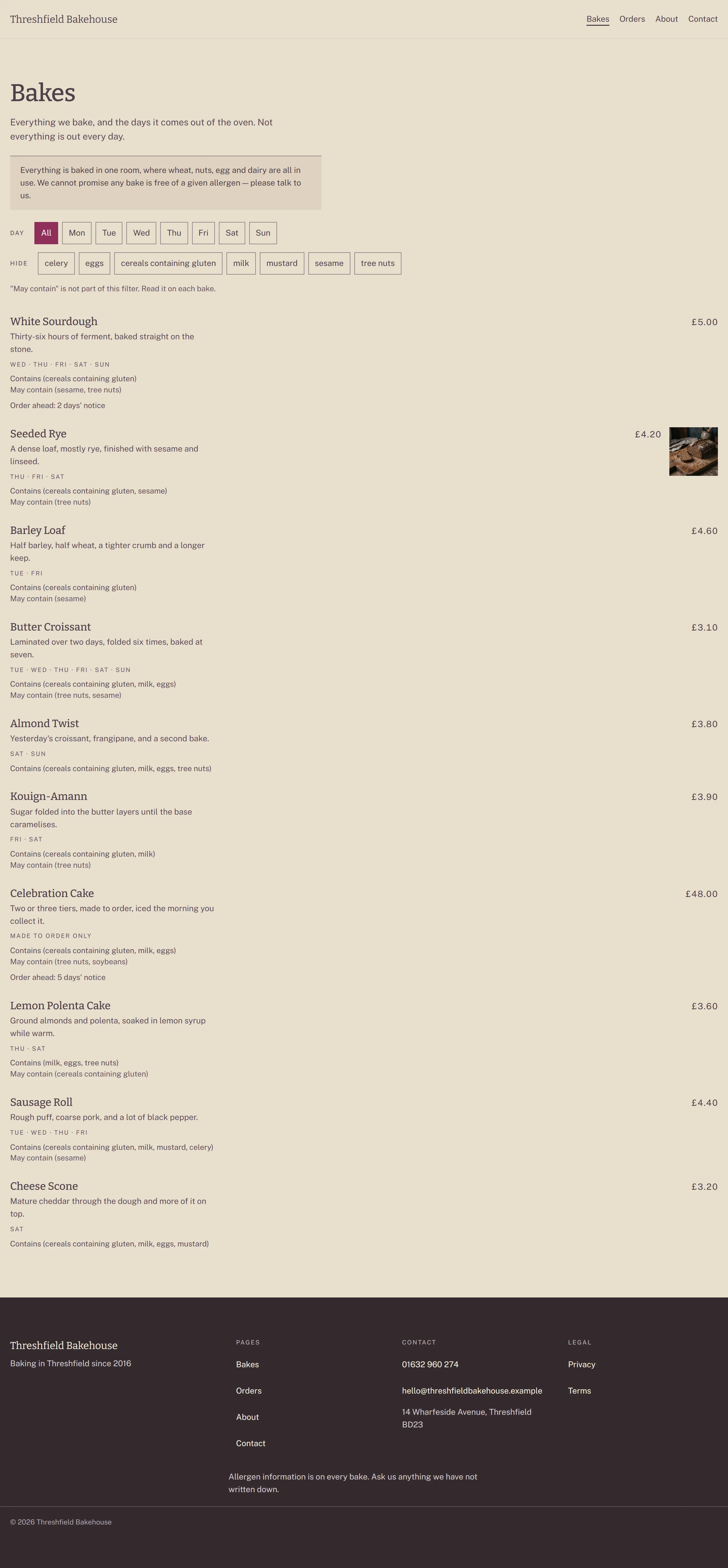
Every bake is data: it carries the weekdays it comes out of the oven and the
allergens it declares, and that one collection produces the day filter, the
allergen filter and the pre-order list. Nothing is written twice, and nothing
carries a date that will be wrong by the end of the month.
Allergen information is the part a template has to be careful with. Hopperton
holds it as a field the shop fills in, ships the cross-contamination wording
beside it, and never implies the list is complete. That is a deliberate
position and it is written down in the theme’s documentation, rather than left
for the buyer to discover.