Everything else in this catalog stays true for months. A menu, a room, a
treatment, a class: write it once and it is still correct in spring. An
exhibition is not like that. It becomes false on a specific date, and the
block on the home page that says “on now” turns into the most visible lie on
the site the morning after the show closes.
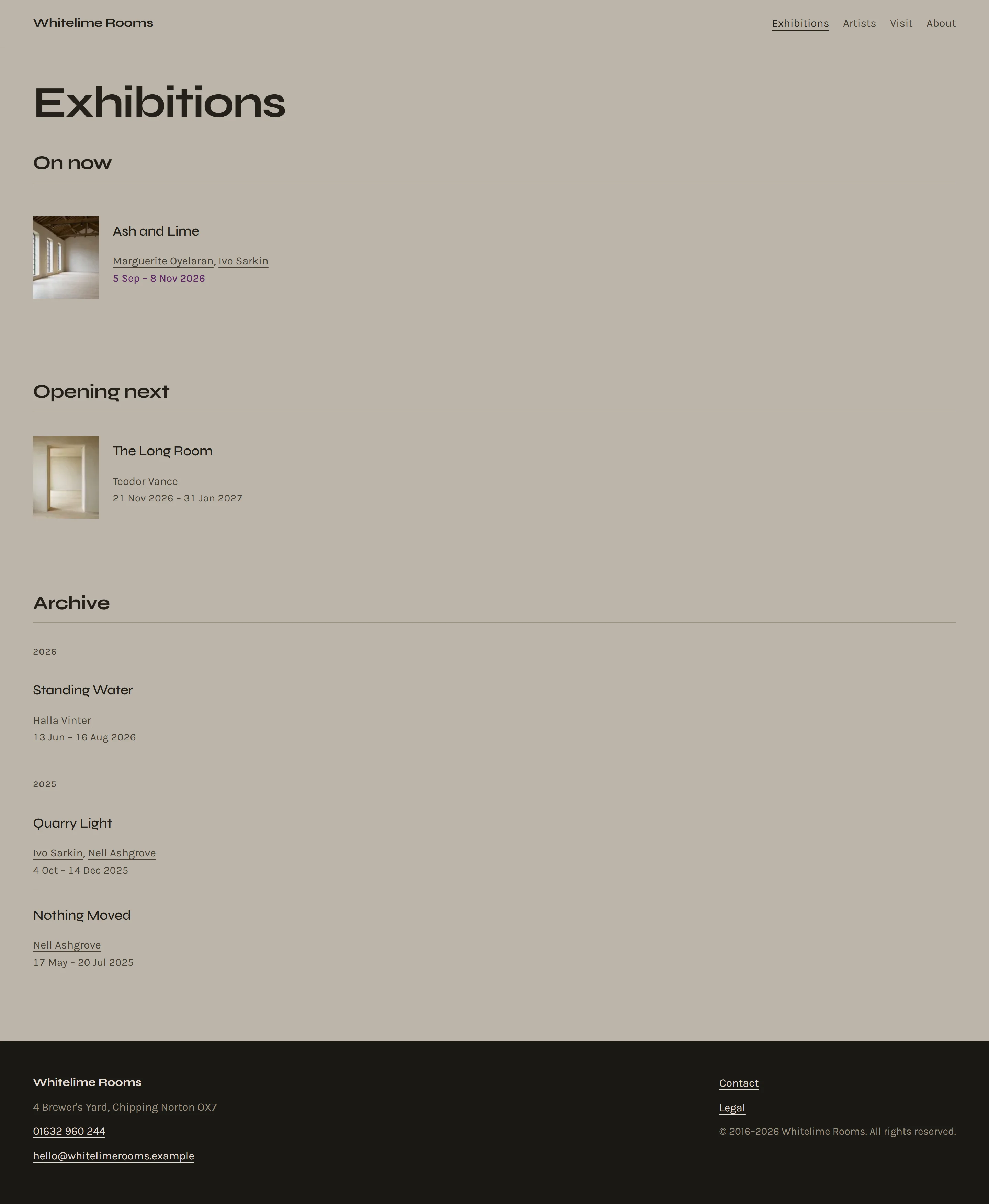
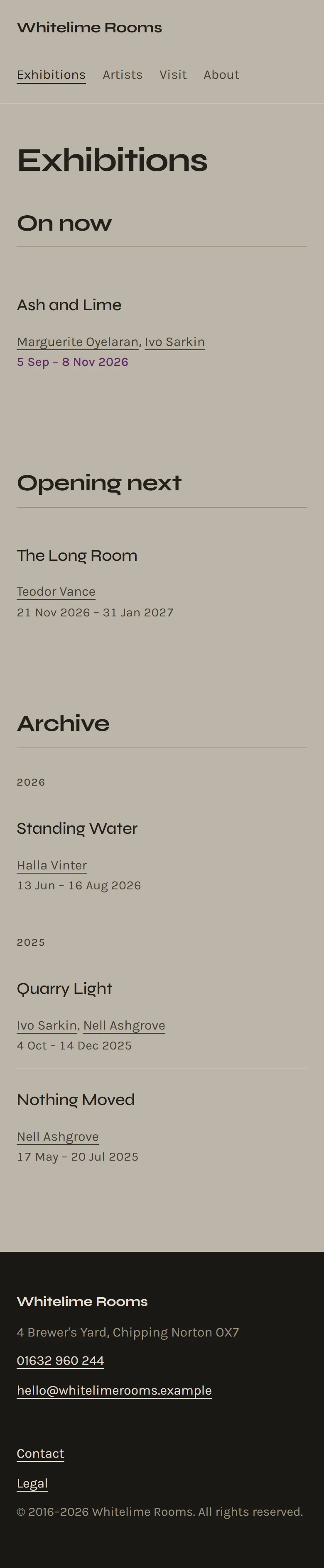
That is the problem Hopton is built around. Each exhibition carries an opening
date and a closing date, and nothing else records its status. On now, opening
next and closed are all read from those two fields, so nobody has to remember
to change a label on the morning a show comes down.
There is an honest limit to that, and this theme states it rather than hiding
it. A static site decides what “today” means at the moment it is built, not at
the moment it is read. A gallery whose headline is a date therefore has to be
rebuilt more often than it is edited. That schedule runs on the host, not
inside the template, so the documentation calls it a requirement rather than a
tip and walks through it for the three hosts most buyers are on. Once it runs,
nobody edits anything; the site republishes itself.
Templates in this category solve a different problem. They model a gallery as
a set of images: a filterable portfolio, a lightbox, a masonry grid. Two of
the better known ones were read for this build, and between them they offer
blog pages, a parallax effect, a contact form. Neither has a date field anywhere.
A gallery’s real work is a program, and a program is made of dates.
The archive is treated as an asset rather than as cleanup. When a show closes
it keeps its address, its text and its artists, and it stays reachable from
the artist’s page and from search. A gallery’s credibility is its past
program; deleting it removes the only proof that the room has been doing
this for years.
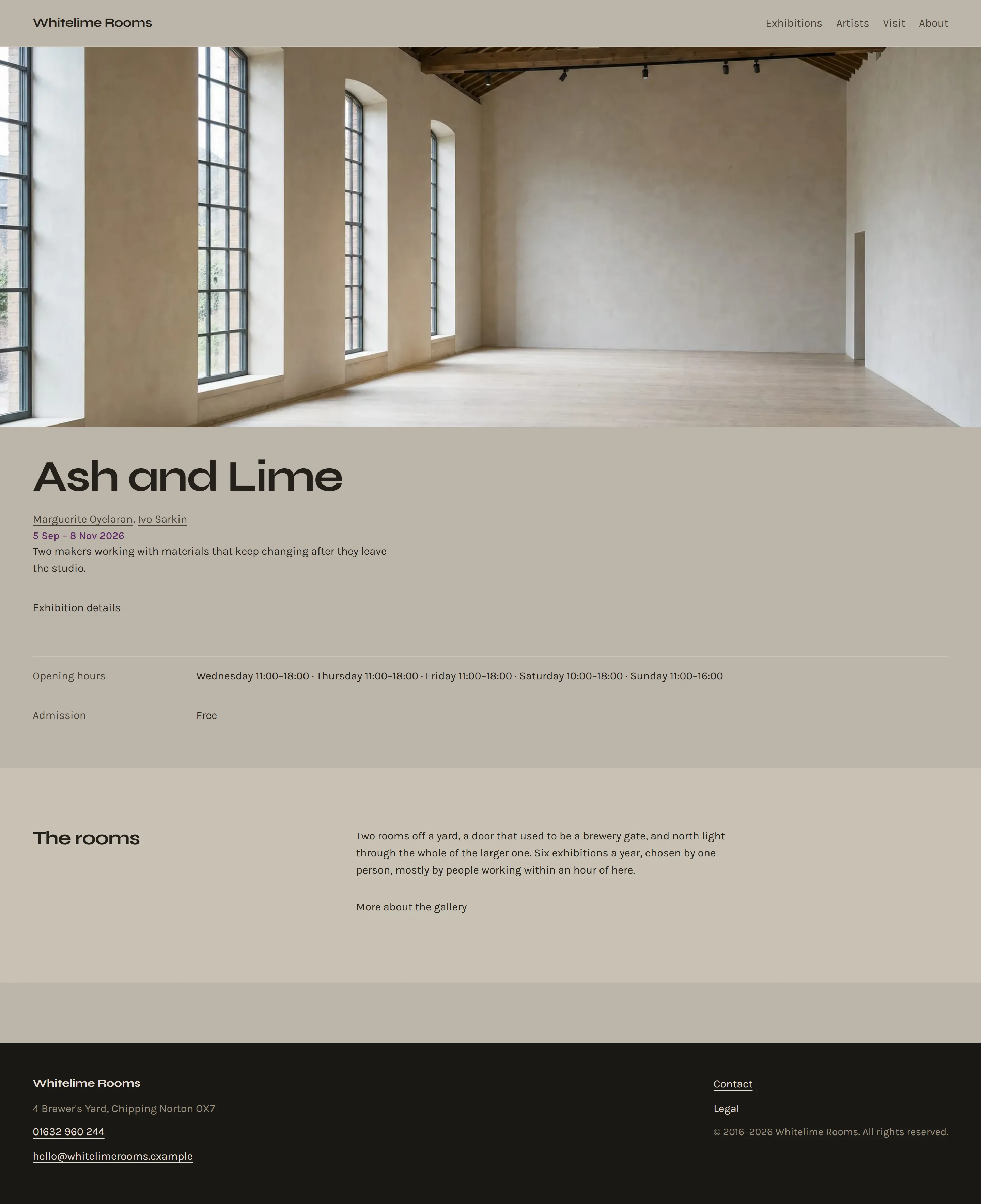
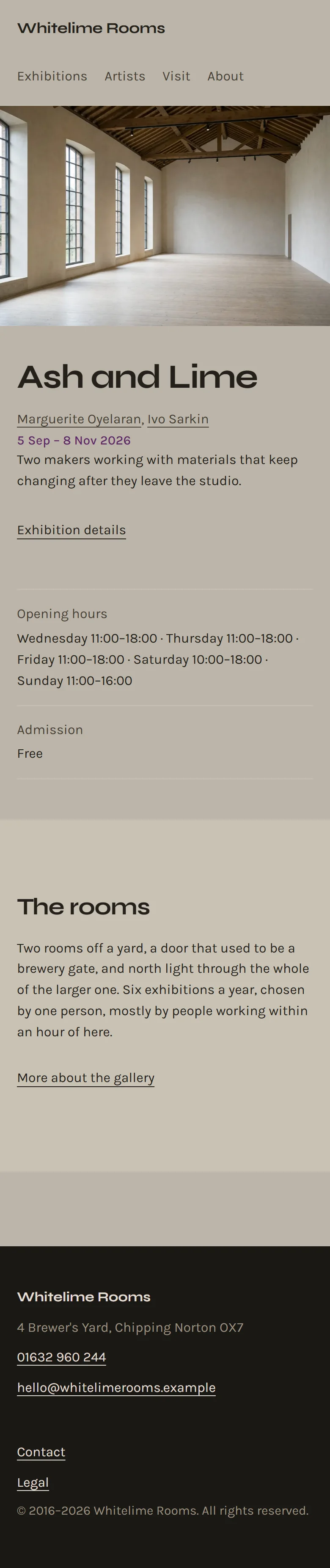
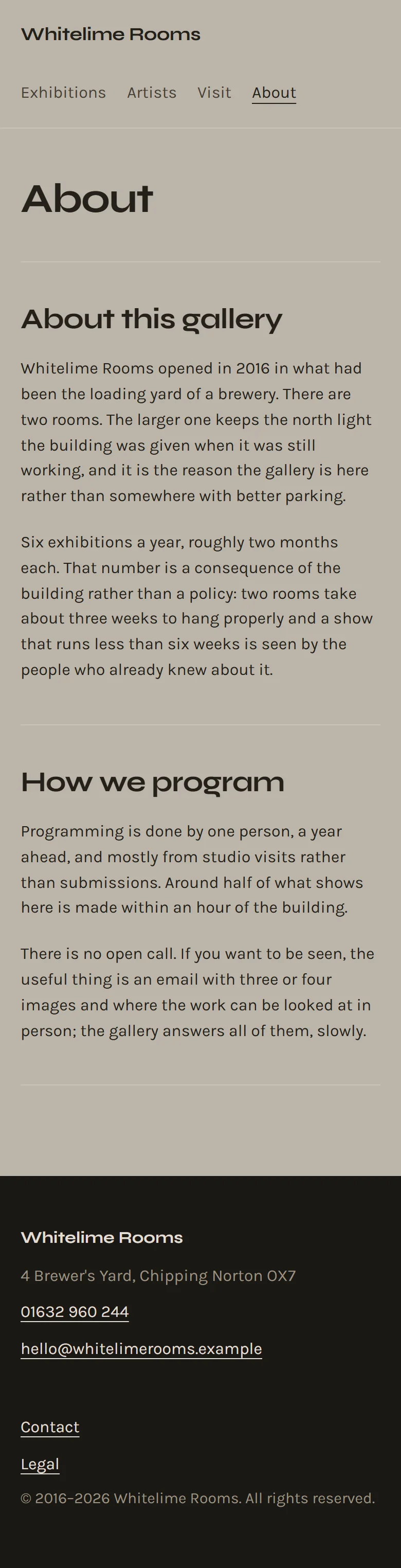
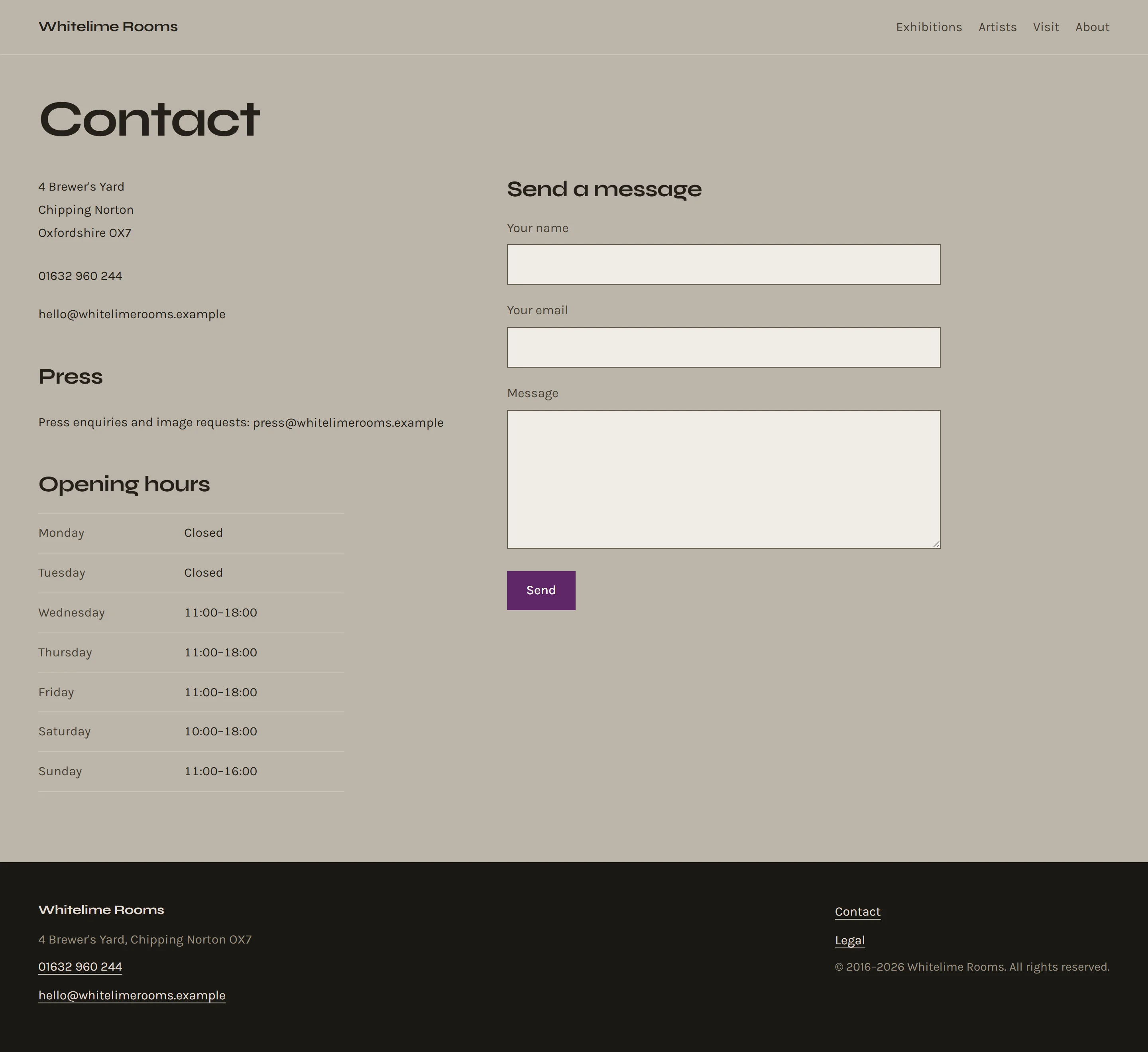
One thing this theme deliberately does not do is show the art. A gallery
exhibits work it does not own, and a template cannot ship photographs of other
people’s paintings for a buyer to publish. So the images here are of the room:
a wall, a doorway, light coming in from the side, floor. It turned out to suit
the theme better than artwork would have. The site is about the space that
holds the work, and it looks like one.