An app that is already in the stores has two faces on the web, and template
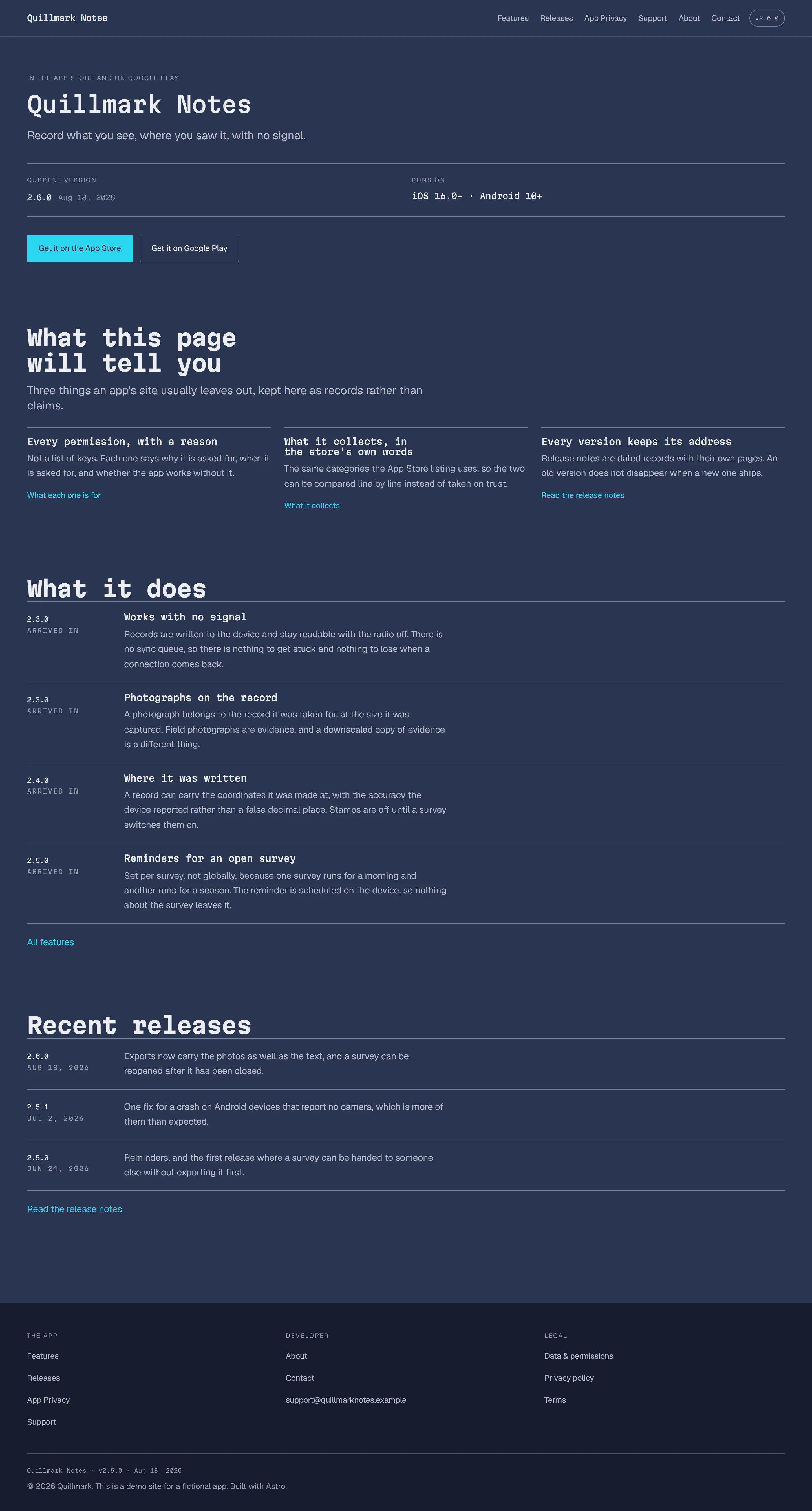
catalogs only sell one of them. The first face is the poster: a hero, a row of
benefit cards, a phone photograph, two download badges. The second face is a
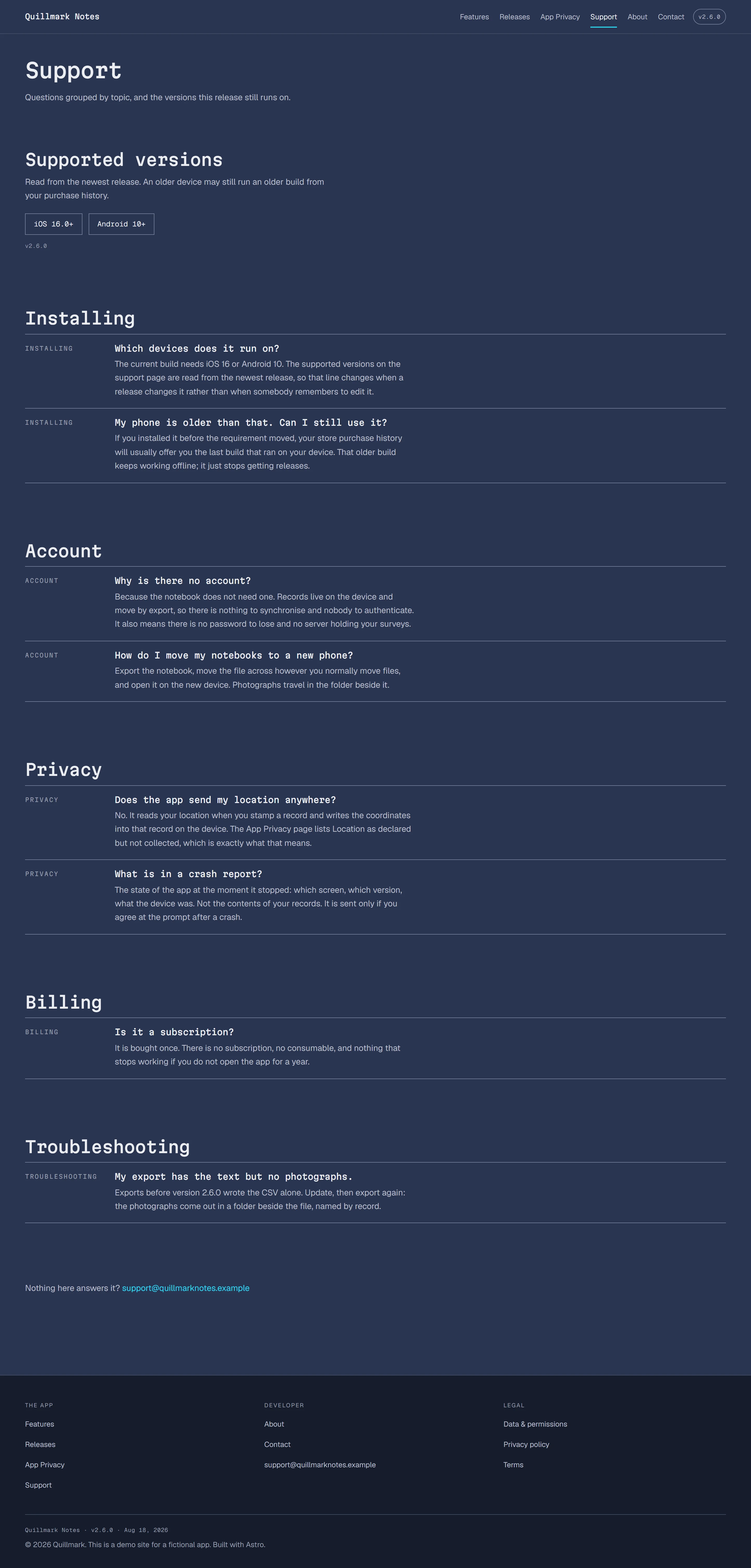
record. What data does this app collect. Which permissions does it ask for,
and why. What changed in the version you just installed. Which devices still
run it.
The second face is the one with a rule attached to it. Apple puts the rule in
one sentence on its own developer page: you are responsible for keeping your
answers accurate and up to date. The site is the other half of that sentence,
and when the two disagree, the wrong one is the site — quietly, for months,
because nothing breaks.
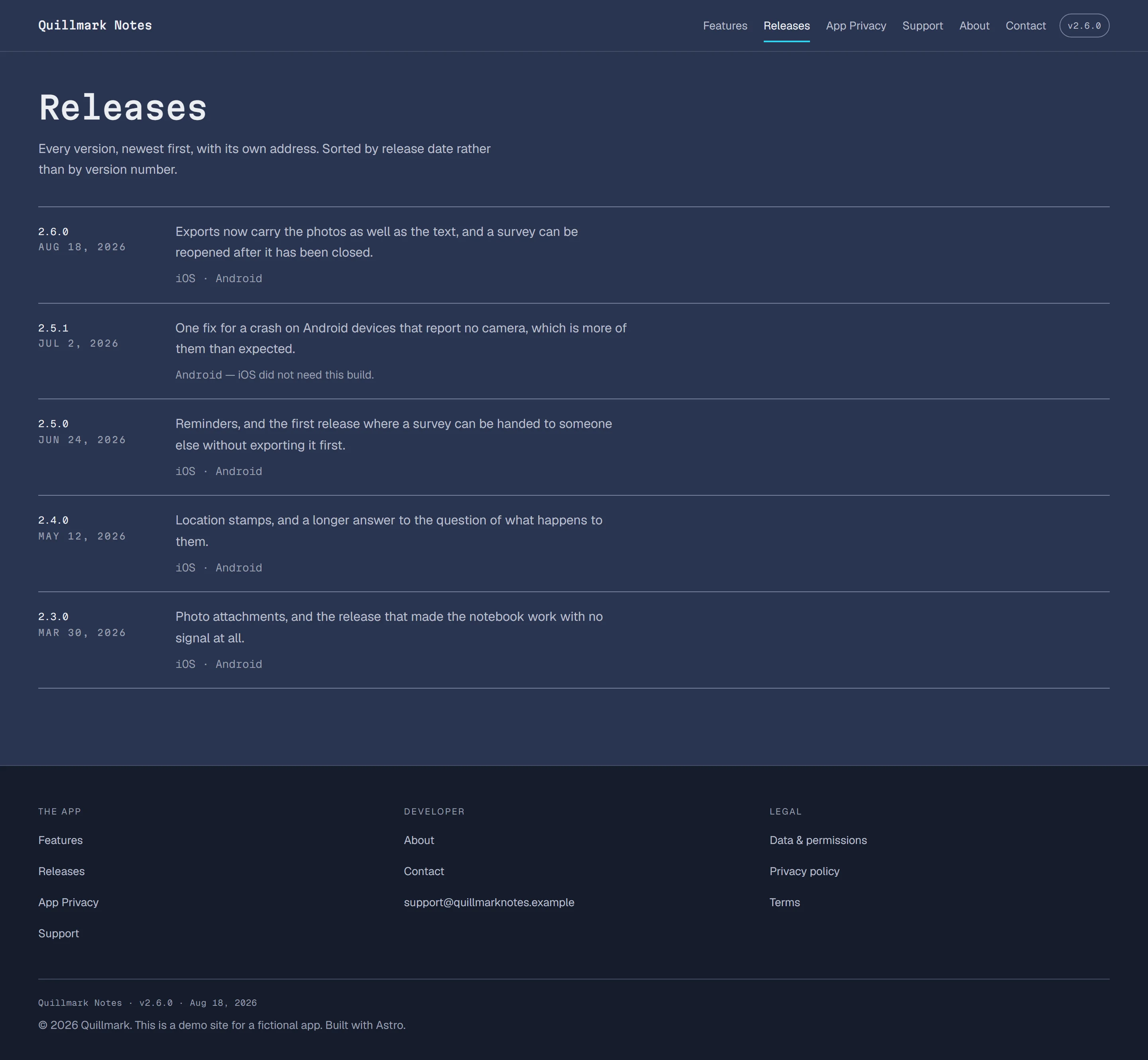
So this template makes the record the product. Releases are a collection with
a version and a date, sorted by date because a version string sorts 2.10.0
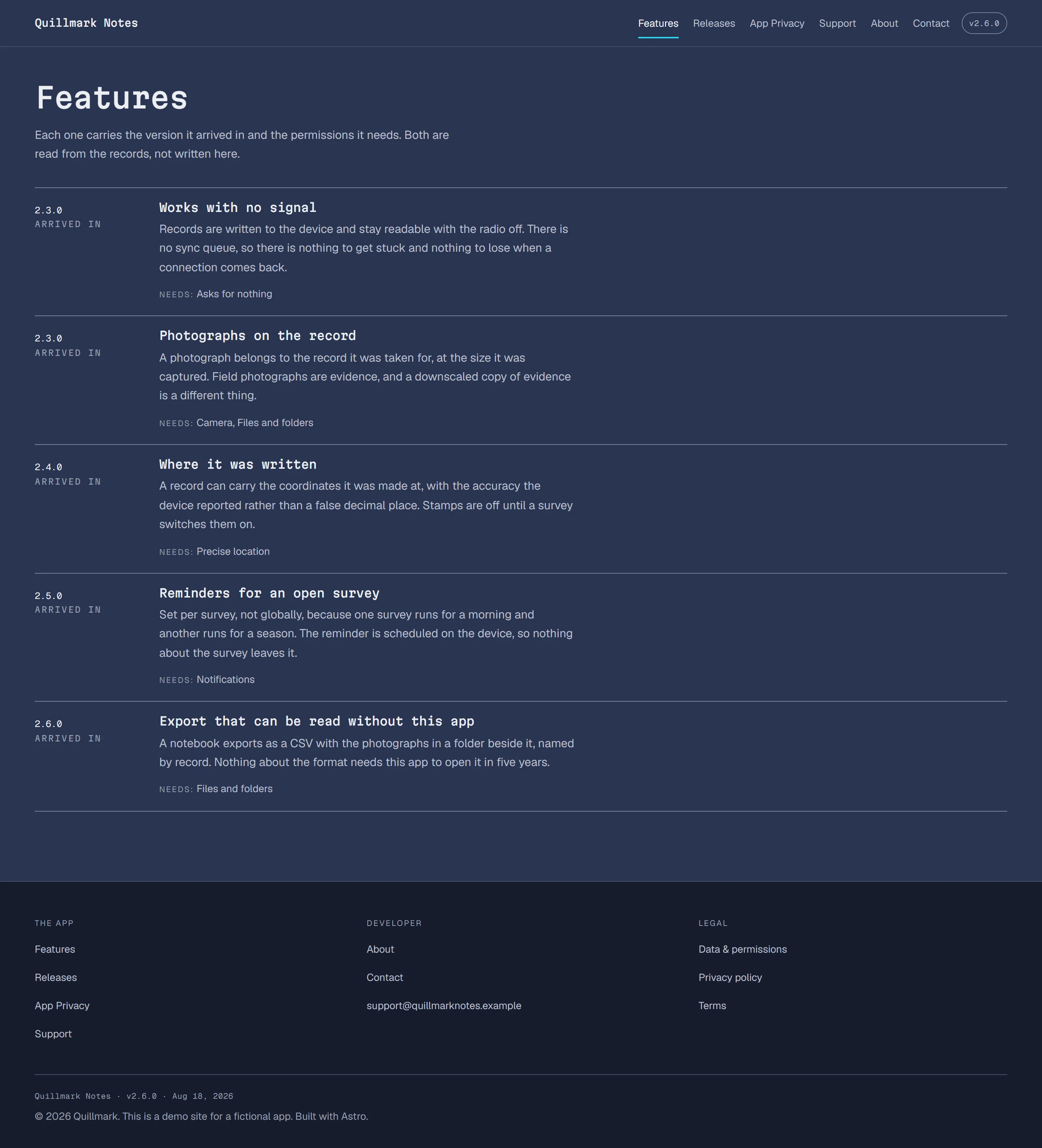
below 2.9.0 and nobody notices until it matters. Permissions are records with
a reason, a moment they are asked for, and a typed reference from the features
that need them, so the answer to “why does it want my camera” is generated
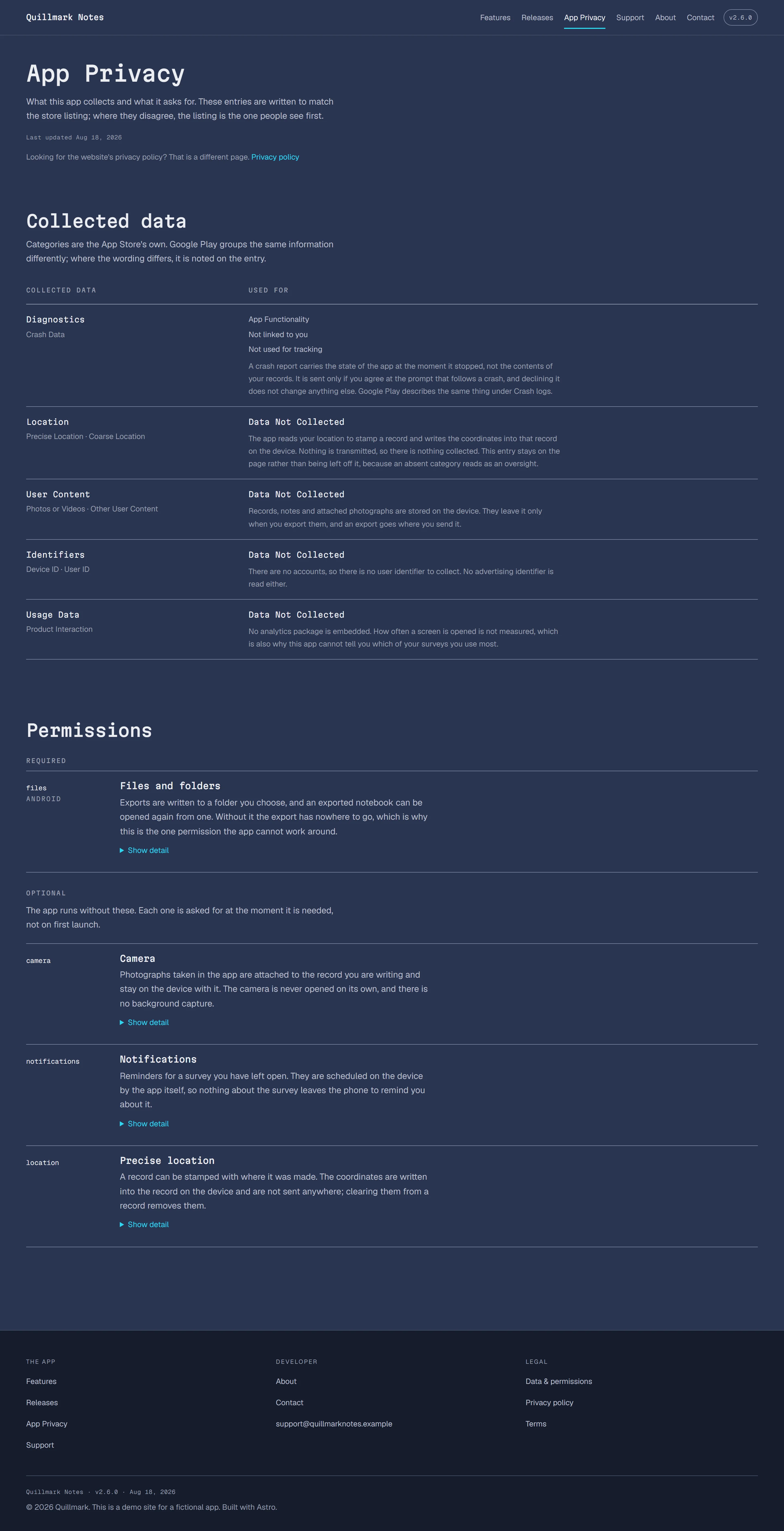
rather than maintained. The collected-data table uses Apple’s own fourteen
categories, not a friendlier set of our own, because a disclosure that cannot
be compared to the store listing line by line is decoration.
Nothing here calls a store API. It is possible to pull a version number and a
rating from Apple at build time, and one free template does exactly that.
It also means the page empties out the day the endpoint moves, the app is
delisted, or the build runs without a network — and it fails into a blank
section rather than an error, so the first person to notice is a visitor.
These facts are yours. They belong in content you can edit, review and
version.
The demo is a fictional offline field notebook, and it was chosen for what it
declares rather than what it does. It asks for three permissions and all three
are optional. It collects almost nothing. A template that argues for honest
disclosure cannot ship a demo that hoovers up everything and calls it
personalization.
It is also the first dark-ground template in this catalog with a monospaced
display face, and both of those are content decisions rather than a mood. The
page is mostly identifiers: 2.3.0, NSCameraUsageDescription, iOS 16.0+. Those
want a column, an even rhythm and a font that does not pretend they are prose.